Deep Insight Technologies

Author name: Aditya Sinha

Uncategorized

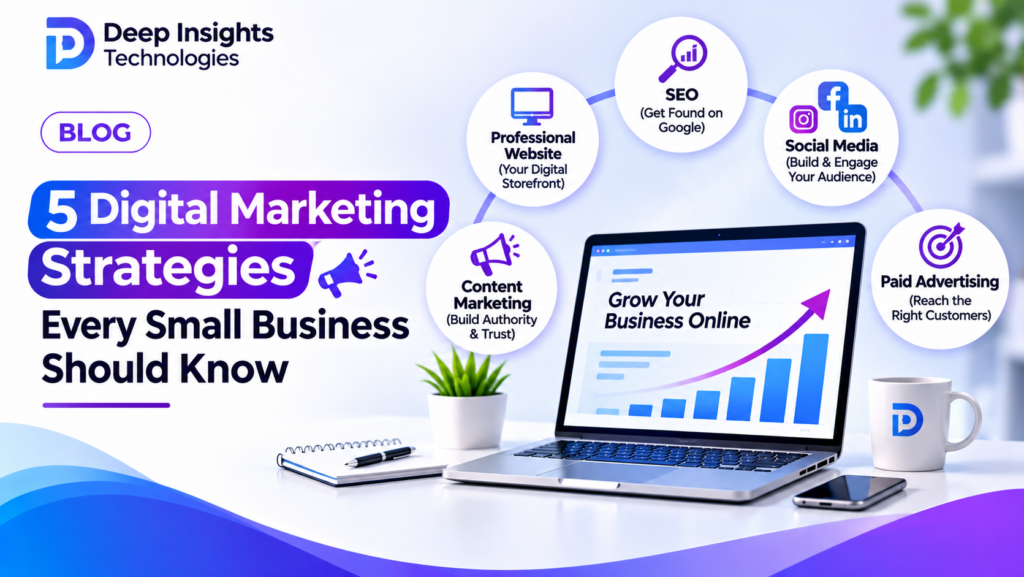
5 Digital Marketing Strategies Every Small Business Should Know

Running a small business requires more than offering a good product or service. You also need to reach the right audience, communicate your value and give potential customers a reason to choose your business. This is where digital marketing becomes important. Customers increasingly use online platforms to research businesses, compare services and make purchasing decisions. A potential customer might discover your company through a Google search, see your social media content, visit your website and finally submit an enquiry. Each of these interactions contributes to the overall customer journey. However, many small businesses struggle to decide where to begin. They may invest time in social media, experiment with advertisements or publish website content without having a clear strategy connecting these activities. Effective digital marketing is not about being active everywhere. It is about selecting the right channels, understanding your audience and creating a consistent experience. Here are five practical digital marketing strategies that can help small businesses strengthen their online presence. 1. Build a Professional Website That Supports Your Business Goals Your website is one of the most important foundations of your digital marketing strategy. Social media platforms and advertising channels can help people discover your business, but your website gives them a dedicated place to understand your services and take action. A professional business website should communicate your value clearly. Visitors should be able to understand what your business offers, who it serves and how they can get in touch. For example, a small consulting business should have service pages explaining its areas of expertise, an About Us section introducing the business and a contact page that makes enquiries simple. The website should also be mobile-friendly, easy to navigate and designed with clear calls to action. Performance matters as well. Large images, unnecessary scripts and poorly configured plugins can affect loading speed and usability. Your website should be treated as an active business asset. Regular updates, useful content and performance improvements can help it support your wider marketing efforts. 2. Improve Your Online Visibility Through SEO Search Engine Optimisation helps your business become more discoverable when people search for relevant information, products or services. Consider a customer looking for a website development company. They may search for specific services, compare different providers and visit several websites before making a decision. If your website is properly optimised, it has a better opportunity to appear for relevant searches. An effective SEO strategy begins with keyword research. Understand the words and phrases your target customers use. Then create useful pages that address those searches. For example, a business offering branding services may develop dedicated pages explaining brand strategy, visual identity and brand communication. Content should answer customer questions rather than simply repeat keywords. Technical SEO is equally important. Your website should have a logical structure, descriptive page titles, appropriate headings and accessible content. Businesses serving a specific geographical area should also pay attention to local SEO. Accurate business details and genuine customer reviews can help customers understand where and how the business operates. SEO takes time and consistent effort. It should be approached as a long-term investment rather than a quick method of generating enquiries. 3. Use Social Media to Build Relationships with Your Audience Social media provides small businesses with opportunities to communicate directly with customers. Platforms such as Instagram, Facebook and LinkedIn can help businesses share information, demonstrate expertise and build brand awareness. However, simply posting promotional messages is rarely enough to create meaningful engagement. Your content should provide value to the people you want to reach. For example, a website development company could publish short videos explaining common website mistakes, carousel posts comparing development approaches and behind-the-scenes content showing its design process. A professional services business might share industry insights, practical tips and answers to frequently asked questions. The content should reflect the audience and the platform. Instagram may be useful for visual storytelling and short-form videos, while LinkedIn may be more suitable for professional insights and business-focused communication. Consistency is important, but businesses should avoid publishing content simply to maintain a posting frequency. Instead, create a content plan with clear objectives such as awareness, engagement, education and enquiries. 4. Reach Target Customers Through Paid Advertising Organic marketing can help businesses build long-term visibility, but it may take time to reach a wider audience. Paid advertising offers another way to promote services and connect with potential customers. Platforms such as Google Ads and Meta Ads provide different advertising opportunities. Google Ads can help businesses reach people actively searching for particular services. For example, a user searching for “website redesign services” may already have a specific requirement. Meta Ads, which include advertising across Facebook and Instagram, can help businesses introduce their services to relevant audiences and promote specific offers. The right platform depends on your audience, business objectives and the way customers make purchasing decisions. Before launching a campaign, define what success looks like. Are you trying to generate enquiries, increase website visits or promote a particular service? Prepare a relevant landing page, create clear advertising messages and make sure visitors have an easy way to take the next step. Start with a manageable budget and test different creative approaches. Monitor metrics such as clicks, enquiries, conversion rates and cost per lead. These insights can help you identify which campaigns deserve further investment. Paid advertising should be supported by a good website and a clear follow-up process. Generating clicks is useful, but converting interested visitors into genuine business opportunities is the real objective. 5. Use Content Marketing to Demonstrate Expertise Content marketing allows businesses to share useful information with potential customers. Instead of focusing exclusively on promotional messages, businesses can publish content that answers questions, explains problems and helps customers make informed decisions. A well-planned content strategy can support SEO, social media marketing and brand positioning at the same time. For example, a digital agency can publish an article explaining the difference between WordPress and custom website development. That article can then be converted into a social media carousel, […]
Uncategorized

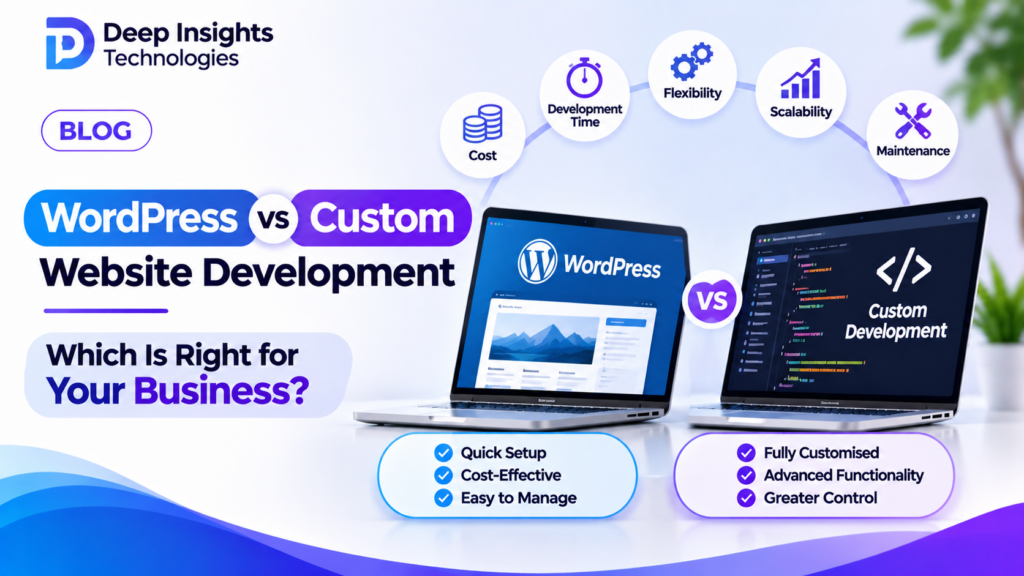
WordPress vs Custom Website Development – Which Is Right for Your Business?

Choosing the right technology for your business website is an important decision. Your website may begin as a simple platform for presenting services and collecting enquiries. As your business grows, however, you may need additional features, integrations and more advanced functionality. This is why selecting the right development approach matters. WordPress is a popular content management system that allows businesses to create and manage websites using themes, plugins and custom development. Custom website development, on the other hand, involves building a digital solution around specific business requirements. Both approaches offer advantages, but they are designed to solve different types of problems. So, should your business choose WordPress or invest in custom development? Let’s understand the differences. What Is WordPress Website Development? WordPress is a content management system (CMS) used to build and manage websites. It provides an administrative dashboard through which website owners can publish articles, update pages, manage media and maintain different aspects of their website. Its flexibility comes from themes, plugins and the ability to customise functionality through development. WordPress is commonly used for business websites, blogs, portfolios, educational platforms and content-focused websites. For businesses that need a professional website with manageable content and standard functionality, WordPress can be a practical option. The Advantages of WordPress One of WordPress’s biggest advantages is its content management capability. Business owners and marketing teams can update website content without needing a developer for every small change. For example, a company that regularly publishes blog articles can use the WordPress dashboard to create and manage content. WordPress also offers a large ecosystem of themes and plugins. These tools can provide features such as contact forms, search optimisation support, security enhancements and e-commerce functionality. Another advantage is flexibility. A WordPress website can be customised to reflect a business’s visual identity and functional requirements. The Limitations of WordPress Although WordPress is flexible, not every requirement can be addressed effectively through standard themes and plugins. Complex functionality may require custom development. Using too many poorly maintained plugins can create performance, security and compatibility concerns. WordPress websites also need regular maintenance. Updates to the core platform, themes and plugins should be managed carefully. Therefore, WordPress should not be treated as a completely maintenance-free solution. What Is Custom Website Development? Custom website development involves creating a digital platform specifically for a business’s requirements. Instead of relying primarily on a pre-built theme or standard plugin ecosystem, developers design and implement the website’s functionality according to the project scope. This approach may involve custom front-end interfaces, back-end systems, databases, APIs and third-party integrations. Custom development can be useful for businesses that need specialised platforms rather than conventional informational websites. Examples include booking systems, customer portals, custom dashboards, internal business applications and platforms with complex workflows. The Advantages of Custom Development The primary advantage is the ability to design functionality around the actual needs of the business. For example, a company may need a customer portal where users can log in, manage information and interact with a specialised service. If existing CMS functionality cannot meet these requirements efficiently, a custom solution may be more appropriate. Custom development also gives developers greater control over the application’s architecture, technology choices and integrations. The interface can be designed around the intended user journey rather than being constrained by a standard theme. The Limitations of Custom Development Custom development requires careful planning and technical expertise. The project may involve more discovery, design, development and testing than a standard business website. The initial investment can also be higher, depending on the complexity of the requirements. Ongoing maintenance is important because the business needs to keep its custom code, infrastructure and integrations working correctly. Businesses should therefore consider the full project lifecycle, not just the initial development cost. WordPress vs Custom Development: Which Factors Matter? 1. Budget WordPress can be a cost-effective option for many standard websites because it provides an established platform and a large ecosystem of tools. Custom development costs depend on the features, architecture, integrations and technical complexity involved. The best choice is not necessarily the cheapest option. It is the approach that provides the functionality your business actually needs. 2. Development Timeline A WordPress website with clearly defined requirements can often be developed relatively quickly. Custom platforms may require additional time for architecture, interface development, programming and testing. However, timelines depend heavily on project scope, design complexity and the availability of content and approvals. 3. Content Management WordPress is particularly useful for businesses that regularly update pages and publish blogs. Custom platforms can also include content management systems, but the editing experience needs to be planned and developed as part of the project. 4. Functionality and Integrations WordPress offers many standard features through plugins and custom development. Custom development may be more suitable when a business requires specialised workflows, advanced integrations or unique application behaviour. 5. Maintenance and Security Both approaches require maintenance. WordPress websites need appropriate updates, backups, security monitoring and plugin management. Custom platforms require code maintenance, infrastructure monitoring, dependency updates and technical support. 6. Future Growth Both WordPress and custom solutions can support business growth when designed appropriately. The important consideration is whether the chosen architecture can support the business’s expected content, traffic, integrations and functional requirements. When Should You Choose WordPress? WordPress may be the right choice if your business needs a professional website with standard functionality. It is worth considering when: When Should You Choose Custom Website Development? Custom development may be more suitable if your project involves specialised technical requirements. Consider it when: Why Understanding Your Requirements Comes First Before selecting a technology, businesses should define the purpose of their website. What should visitors be able to do? Who will manage the content? What systems need to connect with the website? Which features are essential at launch, and which can be introduced later? Answering these questions helps avoid unnecessary development costs and technical complexity. The right technology should support your business objectives, not dictate them. Conclusion WordPress and custom website development both have an important […]

Uncategorized

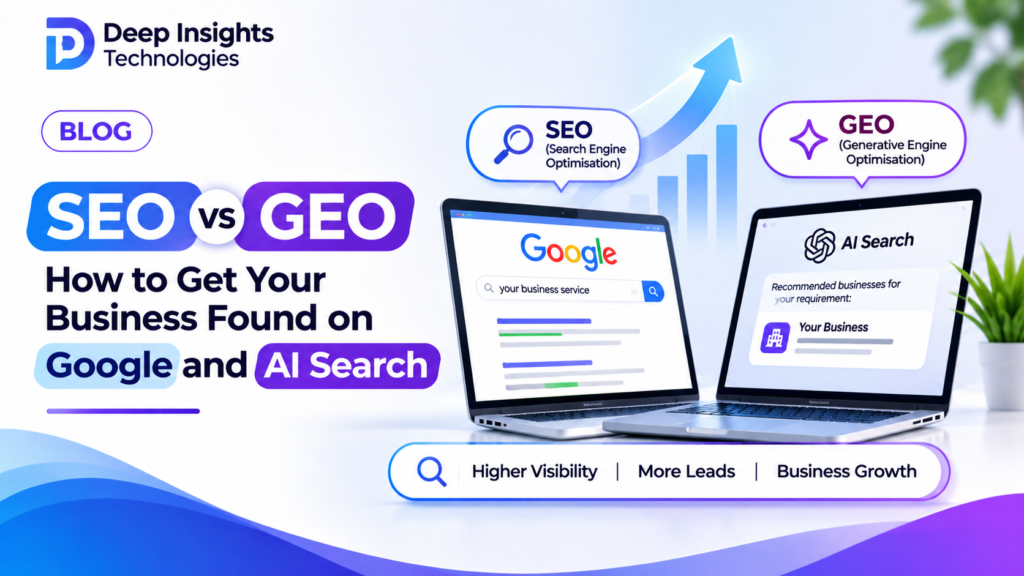
SEO vs GEO – How to Get Your Business Found on Google and AI Search

For many years, search engines have been the primary starting point for people looking for products, services and information. Customers would enter a search query, review the available results and visit websites that matched their requirements. Today, the discovery process is expanding. AI-powered tools allow people to ask detailed questions and receive conversational answers, summaries and recommendations. Instead of searching only for a list of websites, users may ask an AI platform to explain a topic or suggest a solution. This shift has created new opportunities and challenges for businesses that depend on online visibility. Two important terms in this changing environment are Search Engine Optimisation (SEO) and Generative Engine Optimisation (GEO). Although these approaches have different objectives, they share an important purpose: helping people discover relevant and useful information. Understanding how they work can help businesses prepare for the changing digital search landscape. Understanding Search Engine Optimisation (SEO) SEO stands for Search Engine Optimisation. It refers to the process of improving a website so that search engines can discover, understand and potentially rank its content for relevant queries. For example, imagine a business offering professional website development services. Potential customers might search for phrases such as: SEO helps the business improve its chances of appearing in relevant search results. A successful SEO strategy generally involves several areas. Keyword Research: Understanding the phrases customers use when searching for products and services. On-Page SEO: Optimising website titles, headings, content, internal links and relevant page elements. Technical SEO: Improving website performance, crawlability, indexing, mobile usability and technical structure. Content Development: Publishing helpful articles, service pages and resources that address customer needs. Authority Building: Developing a credible online presence through relevant links, mentions and useful information. SEO is an ongoing process. Search engines regularly update their systems, and businesses need to maintain and improve their websites over time. What Is Generative Engine Optimisation (GEO)? Generative Engine Optimisation, commonly called GEO, focuses on improving how business information can be understood and potentially referenced by AI-powered search and answer systems. People increasingly use conversational questions when researching products and services. For example: “How can a small business improve its online presence?” “What should I consider before hiring a website development company?” “Which digital marketing strategies are useful for a new business?” AI systems may generate responses using information from different sources. Depending on the platform and query, they may also provide links or references to supporting sources. GEO encourages businesses to publish clear, informative and credible content that addresses these kinds of questions. It is important to understand that GEO does not guarantee that an AI system will mention or recommend a particular business. The aim is to improve the quality, clarity and discoverability of your digital information. SEO vs GEO: Understanding the Difference SEO and GEO are related, but they are not identical. SEO primarily focuses on improving a website’s visibility in traditional search engine results. GEO focuses on making information useful and understandable within AI-generated search experiences. For SEO, a business may optimise a page around a search phrase such as “website development services”. For GEO, the same business may publish a detailed guide answering questions such as “What should I look for when choosing a website development company?” Both approaches benefit from accurate information, useful content and a technically accessible website. Rather than treating SEO and GEO as competing strategies, businesses should consider how they can complement one another. Why Businesses Should Pay Attention to Both Customer discovery is no longer limited to one search method. Some customers prefer traditional search engines, while others use conversational AI tools to research questions and explore solutions. A business that publishes useful, well-organised information can create more opportunities for customers to discover its expertise across different digital environments. For example, a digital agency could publish: This content can support traditional search visibility while providing useful information that AI systems may be able to interpret. How to Improve Your Website for SEO The first step is understanding what your audience is searching for. Research relevant keywords and organise them according to search intent. A person looking for general information may need an educational article, while someone searching for a specific service may need a detailed service page. Create original content that addresses the purpose behind each search. Your website should also have a logical structure. Use descriptive page titles, clear headings, relevant internal links and meaningful URLs. Technical performance matters too. Ensure your website is mobile-friendly, secure and accessible to search engine crawlers. Finally, review your website regularly using tools such as Google Search Console to identify indexing issues, search queries and opportunities for improvement. How to Prepare Your Website for GEO GEO starts with the quality of your information. Write content that answers real customer questions instead of simply repeating keywords. For example, an article about website development should explain the different development approaches, relevant considerations and practical decision-making factors. Organise the content using descriptive headings and clear paragraphs. Define technical terms where necessary and avoid vague explanations. Demonstrate credibility by including accurate business information, genuine examples and relevant experience. Keep your business details consistent across your website and other credible online platforms. Structured data can also help search engines interpret certain types of website information when implemented correctly. Most importantly, prioritise usefulness and accuracy. There is no guaranteed shortcut to appearing in AI-generated answers. Common SEO and GEO Mistakes to Avoid Businesses sometimes focus too heavily on keywords and forget about the people reading their content. Repeatedly inserting the same phrase does not automatically improve visibility. It can make an article difficult to read. Another common mistake is publishing large amounts of generic content without adding meaningful information. Businesses should also avoid inventing statistics, publishing unsupported claims or using misleading customer testimonials. Technical improvements are valuable, but they cannot replace useful content and a credible business presence. The Future of Search Visibility Search technology will continue to develop, and customer behaviour will evolve alongside it. Businesses should therefore focus on building a strong […]

Uncategorized

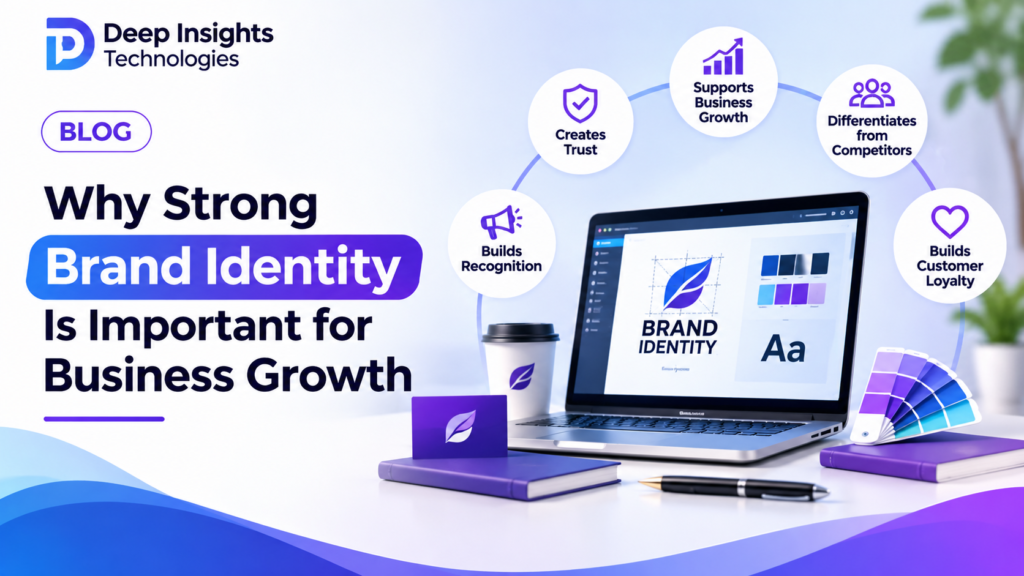
Why Strong Brand Identity Is Important for Business Growth

Think about the businesses you recognise immediately. Sometimes, you can identify a brand simply by seeing its colours, logo, packaging or a familiar style of communication. That recognition is not accidental. It is the result of a carefully developed and consistently presented brand identity. For modern businesses, branding is no longer limited to creating an attractive logo. It is about communicating a clear personality, establishing a distinctive position in the market and creating a consistent experience across every customer interaction. Whether you are launching a startup or managing an established organisation, your brand identity influences how customers perceive your business. A strong brand can help you stand out in competitive markets, communicate your values and build meaningful relationships with customers. In this article, we explore why brand identity matters and how businesses can develop a stronger and more recognisable presence. What Exactly Is Brand Identity? Brand identity is the collection of visual and verbal elements that represent a business. It includes the way your business looks, sounds and communicates with its audience. Some of the most important elements include: Logo and visual identity: Your logo, colours, typography, graphic elements and overall visual style. Brand messaging: The language and messages used to communicate your products, services and business values. Tone of voice: The personality expressed through your website content, social media posts, emails and marketing materials. Brand positioning: The way your business differentiates itself from competitors and communicates its value to the target audience. These elements should work together to create a recognisable and consistent brand experience. 1. Creates a Strong First Impression Customers often form an initial opinion about a business before speaking to anyone from the organisation. They may discover your brand through a website, social media advertisement, search result or recommendation. In these situations, your visual identity and communication style play an important role. An inconsistent logo, confusing messaging or outdated website design can make a business appear less professional. On the other hand, a well-organised visual identity and clear communication help create a more polished impression. This does not mean every business needs an expensive branding campaign. What matters is having a clear identity that accurately reflects the business and its audience. 2. Builds Brand Recognition Recognition develops when customers repeatedly encounter consistent brand elements. Consider a business that uses one logo on its website, a different colour palette on social media and an unrelated design style in its promotional materials. These inconsistencies can make it harder for customers to connect the different communications with the same business. A defined brand identity solves this problem by establishing consistent visual and verbal guidelines. These guidelines can cover logo usage, colour combinations, typography, image styles and tone of voice. When applied consistently, they help create familiarity and make your business easier to recognise across different platforms. 3. Helps Your Business Stand Out from Competitors Most industries contain businesses offering similar products or services. Customers therefore need reasons to choose one company over another. Your brand identity can help communicate what makes your business different. For example, two companies may provide website development services, but they may have different approaches, specialisations, customer experiences and brand personalities. One may focus on innovation and technical expertise, while another may position itself around simplicity and personalised support. Your brand should communicate the qualities that genuinely distinguish your business. This requires understanding your audience, competitors and unique value proposition. A distinctive identity is not about looking different for the sake of it. It is about presenting your business in a way that reflects its actual strengths. 4. Develops Customer Trust and Credibility Trust is an important factor in customer decision-making. Before investing in a product or service, customers want to understand whether a business is professional, reliable and capable of meeting their expectations. A consistent brand experience can support this perception. Imagine a customer visiting your website after seeing your advertisement. If both platforms communicate the same message and maintain a consistent design style, the experience feels connected. If the website looks completely different from the advertisement, the customer may feel uncertain. Brand consistency helps reduce this disconnect. However, visual presentation alone cannot establish long-term trust. Businesses must also deliver quality services, communicate honestly and provide a positive customer experience. 5. Creates an Emotional Connection with Customers Customers do not always make decisions based only on price or product specifications. They may also consider a company’s values, personality and approach to customer service. Brand storytelling helps businesses communicate these qualities. For example, a company that values innovation can demonstrate this through its messaging, design choices and examples of its work. Similarly, a business that focuses on customer support can communicate its approach through helpful content and clear customer communication. The important point is that your brand personality should be authentic. When your communication reflects your actual business values, it becomes easier to develop meaningful customer relationships. 6. Makes Marketing More Consistent and Effective Without established brand guidelines, marketing materials can become inconsistent. Different team members may use different colours, fonts, writing styles and messaging. This can create an uncoordinated experience across digital channels. A documented brand identity provides a common reference for marketing activities. Your business can use it when creating: This makes it easier to maintain consistency while creating different types of marketing content. It also helps businesses communicate a recognisable identity as they expand into new channels. 7. Supports Long-Term Business Growth Brand identity should be viewed as a long-term business asset rather than a one-time design project. As your business grows, you may introduce new services, enter new markets or target different customer groups. A clearly defined brand foundation makes it easier to communicate these developments without losing your identity. It also provides a consistent framework for future marketing and communication. Over time, a recognisable brand can support customer familiarity, referrals and stronger market positioning. The impact depends on the quality of your products and services, customer experience and consistency of execution. How to Build a Strong Brand Identity Creating […]

Uncategorized

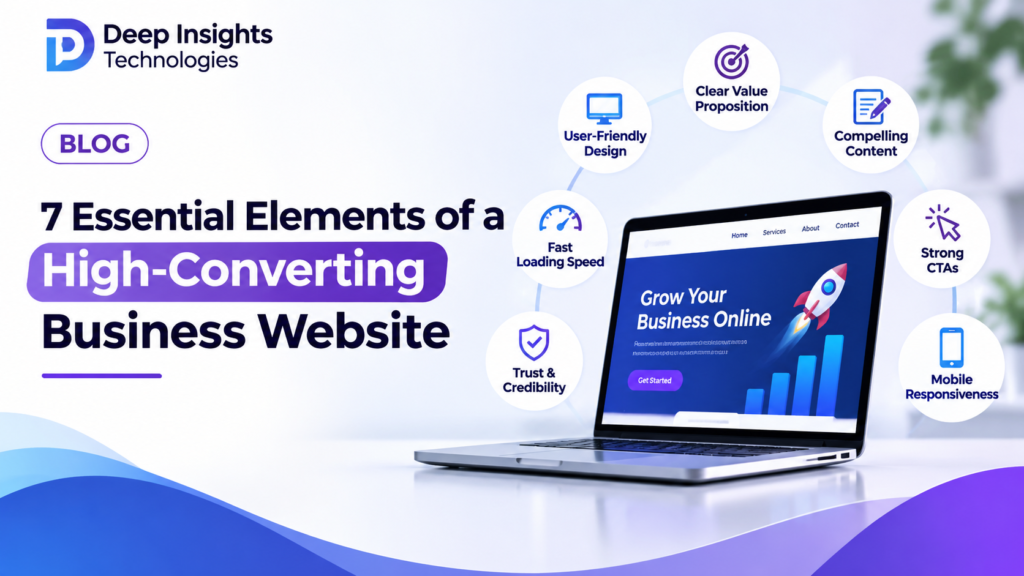
7 Essential Elements of a High-Converting Business Website

Your website is more than just an online presence. It is your digital storefront, your brand representative and often the first point of contact between your business and potential customers. Imagine a potential customer searching online for a service your business provides. They discover your website, click on your homepage and start exploring. Within a few seconds, they begin forming an opinion about your business. Does your website communicate professionalism? Can visitors easily understand what you offer? Is it simple for them to contact your team? These questions highlight an important fact: having a website does not automatically generate business. Your website needs to be strategically designed to attract visitors, communicate value and encourage meaningful action. A high-converting website combines visual design, functionality, user experience and persuasive content. Every element should work together to guide visitors towards becoming customers. In today’s competitive digital environment, businesses cannot afford to treat their websites as simple online brochures. They need digital platforms that actively support their growth. Let’s explore seven essential elements that can help transform your business website into a more effective customer acquisition tool. 1. A Clear and Compelling First Impression When visitors land on your website, they should immediately understand what your business does and how it can help them. A confusing homepage can cause potential customers to leave before exploring your services. This is why the first section of your website, commonly known as the hero section, deserves careful attention. A strong hero section should include a meaningful headline, a short supporting description and a clear call-to-action. For example, instead of using a generic headline such as “Welcome to Our Website”, a web development company could communicate its value through a statement such as “Building Digital Experiences That Help Businesses Grow.” The headline explains the purpose of the business while giving visitors a reason to explore further. Your website’s first impression should also reflect your brand personality through appropriate colours, typography, imagery and layout. 2. User-Friendly Navigation and Structure A website may contain excellent information, but visitors will struggle to benefit from it if they cannot find what they need. Navigation is the system that helps users move between different sections of your website. It should be simple, logical and consistent. For most business websites, the main navigation should include pages such as Home, About Us, Services, Blog and Contact Us. Service pages should also be organised in a way that allows visitors to understand individual offerings without unnecessary searching. For example, a company providing branding, website development and digital marketing services should clearly explain each service on its own dedicated page. A well-organised structure improves usability and helps search engines understand the relationship between different pages. The objective is simple: visitors should be able to find relevant information without feeling lost. 3. Responsive Design Across All Devices Customers do not access websites from just one type of device. Some browse using desktop computers, while others use smartphones or tablets. A website that looks impressive on a desktop but becomes difficult to navigate on a mobile phone can create a poor user experience. Responsive web design ensures that your website adjusts to different screen sizes while maintaining usability and visual consistency. This involves more than simply reducing the size of website elements. The layout, navigation, images, text and interactive components must all adapt appropriately. For instance, a desktop navigation menu may become a mobile-friendly menu, while multi-column layouts can transform into vertically stacked sections. A responsive website allows visitors to explore your business comfortably, regardless of the device they use. 4. Website Loading Speed and Performance Website performance plays an important role in the overall user experience. When a website takes too long to load, visitors may become frustrated and leave. Slow performance can also affect how search engines evaluate the experience provided by a website. Several technical factors influence loading speed, including image sizes, hosting quality, unnecessary scripts and poorly optimised code. Businesses can improve website performance by compressing images, reducing unnecessary plugins, enabling appropriate caching and using efficient website technologies. It is also important to monitor Core Web Vitals, which measure aspects of loading performance, interactivity and visual stability. A fast website does not simply feel better to use. It also creates a stronger foundation for marketing and customer acquisition. 5. Clear and Persuasive Calls to Action A visitor may like your website and understand your services, but what should they do next? This is where calls to action, commonly known as CTAs, become important. A CTA directs visitors towards a specific action. Depending on your business objectives, this could be requesting a quotation, booking a consultation, submitting an enquiry or exploring a service. Examples include: Effective CTAs should be visible, relevant and easy to understand. They should also appear at appropriate points throughout the website. For example, a service page may include an enquiry button after explaining the benefits of that particular service. The goal is to make the next step obvious without overwhelming visitors with too many competing messages. 6. Trust-Building Content and Social Proof Before contacting a business, potential customers often look for reasons to trust it. Your website should help answer important questions about your experience, expertise, working approach and service quality. Genuine testimonials, portfolio examples and case studies can help demonstrate your capabilities. For example, a website development company can showcase selected projects to explain the type of work it delivers. A case study can describe the client’s challenge, the approach taken and the verified outcome. Other useful trust-building elements include clear business information, team profiles, genuine customer reviews and transparent service descriptions. Avoid exaggerated claims or unsupported statistics. Authentic information creates a more credible impression than marketing statements that cannot be verified. 7. SEO-Friendly Website Architecture and Content Even the most attractive website needs visibility to reach potential customers. Search Engine Optimisation helps search engines understand your website and determine how relevant its content may be to different search queries. A strong SEO foundation begins with a logical website structure […]

Scroll to Top